How to Cold Call: The Complete Guide for Sales Reps

Every effective cold call runs through four stages. First, you open: in the first 10 seconds you state your name, company, and a reason for calling that's relevant to them. That alone boosts success 2.1x. Then you run discovery by asking 11-14 genuine questions, which lifts success rates by 70%. You handle objections with the LAER framework (Listen, Acknowledge, Explore, Respond). And you close by proposing one specific time, never leaving the next step open-ended. Average success rates sit around 2-4%, but top teams hit 6-7%+, and the difference is technique and practice, not talent. Here's how to get each stage right.
Cold calling still generates pipeline better than almost anything else. Most reps hate it because nobody ever taught them how to do it well.
Per HubSpot's 2025 State of Cold Calling Report, 72% of sales professionals think cold calling is at least somewhat effective, and 68% work at companies that actively use it. Reps struggle anyway because they're dialing without a framework.
This guide breaks down every stage so you walk into each dial with a plan.
Cold Calling Tips: The Anatomy of Successful Cold Calls
Why Cold Calling Still Works
Whatever you've read on LinkedIn, cold calling isn't dead. Companies that invest in outbound keep beating the ones that lean on inbound alone. Research from Cognism shows that 57% of C-level and VP prospects would rather be contacted by phone than any other channel.
The industry average cold call success rate sits around 2-4%, but top-performing teams hit 6-7%+ conversion rates. Per Martal Group's analysis, what separates average from top isn't talent, it's technique.
The best cold callers all do three things. They practice before they hit the phones. They run a framework at every stage of the call. And they look at what worked, then adjust.
HubSpot found that 55% of top performers cite a personalized, research-driven approach as their most successful technique. The extra 3 minutes of research before you dial pays for itself.
The Anatomy of a Cold Call
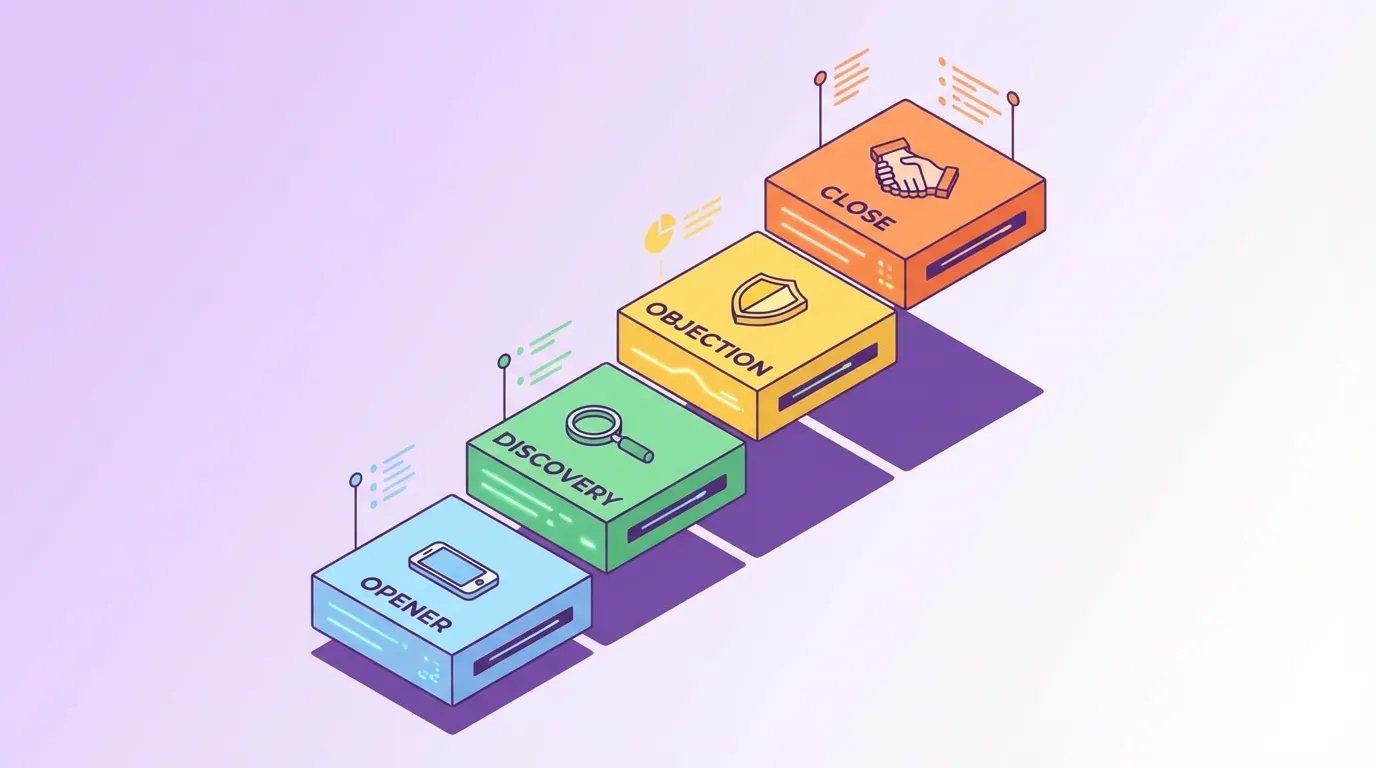
Every cold call has four stages. Nail all four and you'll book meetings consistently.
1. The Opener (First 10 Seconds)
Your opener decides whether the prospect keeps listening or hangs up. Per Gong's research, stating your reason for calling increases success rates by 2.1x. You're not trying to pitch here. You're trying to earn permission to keep talking.
What works:
- State your name and company clearly
- Give a reason for the call that's relevant to them
- Ask a permission-based question ("Do you have 30 seconds?")
What doesn't work:
- Starting with "How are you today?" (sounds like telemarketing)
- Launching into a pitch immediately
- Being vague about why you're calling
- Asking "Is this a bad time?" (reduces success rates by 40%)
HubSpot's research found that 34% of top performers use pattern interrupt or unexpected openings. Saying "I'll be honest, this is a cold call" can disarm prospects who expect a typical sales pitch.
For specific opening lines that work, see our guide on cold call opening lines.
2. Discovery (The Middle)
Once you've earned their attention, your job is to understand their situation. This is where most reps blow it. They start selling before they understand the problem.
Per Yesware's research, asking 11-14 questions during a cold call increases success rates by 70%. That's not rapid-fire interrogation. It's genuine curiosity about what they're dealing with.
Good discovery questions:
- "What's your current process for handling [area]?"
- "What's working well? What would you change if you could?"
- "Who else is typically involved in decisions like this?"
- "What's driving the timeline on this?"
Discovery mistakes to avoid:
- Asking questions you could have researched beforehand
- Launching into your pitch after the first answer
- Not following up on interesting responses
- Talking more than listening
Gong research found that successful cold calls average 5:50 minutes while unsuccessful ones average just 3:14. That extra time goes into discovery, not pitching. If you want a structured way to run it, the Sandler Selling System and its "pain funnel" is about the best framework going for getting a prospect to say out loud what their problem is actually costing them.
3. Objection Handling
Objections aren't rejection. They're requests for more information. Good reps welcome them, because an objection means the prospect is still engaged.
Common objections and how to handle them:
| Objection | Response Approach |
|---|---|
| "We already have a solution" | Ask what they like about it and what they'd change |
| "Send me an email" | Acknowledge, ask one question to determine relevance |
| "Not interested" | Ask what specifically isn't relevant, share one insight |
| "Bad timing" | Acknowledge, ask what good timing looks like, set callback |
| "No budget" | Shift from cost to ROI and value creation |
The key is the LAER framework: Listen, Acknowledge, Explore, Respond. Never skip Explore. That's where you find the real objection sitting behind the surface-level one.
For a deep dive on every objection type, see our complete guide on handling sales objections.
4. The Close
Closing a cold call isn't signing a deal. It's getting a specific next step. Per Klenty's research, always propose a concrete time and never leave it open-ended.
Strong closes:
- "Would Tuesday at 2pm or Thursday at 10am work better?"
- "Can I get 15 minutes on your calendar this week to show you X?"
- "I'll send you a calendar invite for [specific time]. If that doesn't work, just let me know."
Weak closes to avoid:
- "I'll follow up sometime next week"
- "Let me know when you're free"
- "Think about it and get back to me"
"I'll get back to you" is not an acceptable outcome. Marc Wayshak's research puts the odds of a prospect actually getting back to you at about 1 in 100.
Best Times to Call
Timing matters. Per industry research:
- Best times: 10-11 AM and 4-5 PM (prospect's local time)
- Best days: Tuesday, Wednesday, Thursday
- Worst time: Monday morning (6 AM to noon)
- Best day overall: Wednesday shows 50% higher success rates than Monday
Calls made between 4-5 PM are 71% more effective than calls made at other times. Plan your calling blocks accordingly.
The Multi-Touch Approach
Cold calling works best as one part of a coordinated sequence. Research shows that teams running coordinated sequences (calls, emails, LinkedIn) see up to 37% more conversions than single-channel efforts.
A typical sequence might look like:
- Day 1: Cold call attempt #1
- Day 2: Personalized email referencing the call
- Day 4: Cold call attempt #2
- Day 5: LinkedIn connection request
- Day 8: Cold call attempt #3 + email
Most reps give up after one attempt, but it usually takes 3-6 to connect with a prospect. Persistence pays off.
Using "We" Instead of "I"
Small language changes move the needle. Gong's data shows reps who use "our" and "we" instead of "I" see a 35% increase in meeting bookings.
Instead of: "I can help you solve..." Say: "We've helped companies like yours solve..."
Instead of: "I'd love to show you..." Say: "Our customers typically see..."
That small shift positions you as a partner instead of a salesperson pushing a product.
Practice Makes the Difference
The reps who hit quota every month don't have a secret script. They've just practiced more than everyone else, and they've handled every objection in rehearsal before it ever showed up on a live call.
Per EBQ's research, AI call analysis and coaching tools can improve success rates by roughly 50%. The feedback loop is what speeds you up.
Here's how to build the muscle:
- Write your scripts for opener, discovery, and common objections
- Practice out loud. Reading silently doesn't build muscle memory
- Record yourself and listen back for filler words and tone
- Roleplay with colleagues who'll throw realistic objections at you
- Use an AI cold call simulator for unlimited reps
Simulators like CallCombat let you practice against AI prospects who push back, object, and behave like real buyers. You get scored after every call, so you know exactly what to fix.
For a complete framework on ramping new SDRs, see our SDR training playbook.
Common Mistakes to Avoid
Even experienced reps fall into these traps:
- Talking too much: In lost deals, reps spoke 62% of the time. In won deals, 57%. Listen more.
- Skipping research: 3 minutes of prospect research can boost conversion by 82%.
- Not handling silence: Silence after an objection is fine. Don't rush to fill it.
- Weak openers: Your first 10 seconds decide the call. See our opening lines guide.
- No clear ask: Every call needs a specific next step.
Key Takeaways
- Every cold call has four stages: opener, discovery, objection handling, and close
- Your opener should earn permission, not pitch. State your reason for calling
- Discovery is about understanding, not selling. Ask 11-14 questions
- Objections are buying signals in disguise. Use the LAER framework
- Always close with a specific next step and time
- Practice consistently to build confidence and skill
The gap between average and great cold callers isn't huge. It's a handful of small improvements you repeat until they stick. Pick one area, practice it until it's natural, then move to the next.
Frequently Asked Questions
How do you cold call effectively?
Work through the four stages of every cold call. Open by stating your name, company, and a relevant reason for calling in the first 10 seconds (stating your reason boosts success 2.1x per Gong). Run discovery by asking 11-14 genuine questions, which lifts success rates by 70%. Handle objections with the LAER framework (Listen, Acknowledge, Explore, Respond). Close by proposing one specific time, never leaving the next step open-ended. Practice the script out loud before you dial.
What is the success rate of cold calling?
The industry average cold call success rate is around 2-4%, while top-performing teams reach 6-7% or higher. Per Martal Group, the gap comes down to technique, not talent. Persistence matters too: most reps quit after one attempt, but it usually takes 3-6 attempts to connect with a prospect.
How many questions should you ask on a cold call?
Aim for 11-14 questions during a cold call. Yesware's research found this range increases success rates by 70%. It's not rapid-fire interrogation; it's genuine curiosity about the prospect's current process, what's working, what they'd change, who else is involved, and what's driving the timeline. Talk less and listen more: in won deals reps spoke about 57% of the time versus 62% in lost deals.
What is the best time to make cold calls?
The best times are 10-11 AM and 4-5 PM in the prospect's local time, and the best days are Tuesday, Wednesday, and Thursday. Wednesday shows about 50% higher success than Monday, and calls made between 4-5 PM are roughly 71% more effective than at other times. Avoid Monday morning (6 AM to noon).
How do you open a cold call?
In the first 10 seconds, clearly state your name and company, give a reason for calling that's relevant to the prospect, and ask a permission-based question like "Do you have 30 seconds?" Avoid "How are you today?", jumping straight into a pitch, or asking "Is this a bad time?", which reduces success rates by about 40%. A pattern interrupt such as "I'll be honest, this is a cold call" is used by 34% of top performers. See our cold call opening lines guide for specific lines.
How should you close a cold call?
Close by getting a specific next step, not a vague promise. Propose a concrete time ("Would Tuesday at 2pm or Thursday at 10am work better?") rather than "I'll follow up next week." "I'll get back to you" is effectively a dead end: Marc Wayshak's research shows the odds of a prospect actually following up are about 1 in 100.
Continue learning:
- The Ultimate Cold Call Script Guide: 12 complete templates
- 25 Common Sales Objections and How to Handle Them
- 21 Cold Calling Tips from Top Performers
Ready to put this into practice? Grab our cold call script templates for frameworks you can customize, or start practicing with an AI cold call simulator that gives you realistic pushback with nothing on the line.
Related Articles

21 Cold Calling Tips That Top Performers Use to Book More Meetings
Proven cold calling tips from SDRs booking 15+ meetings per week. Learn the strategies, mindsets, and techniques that separate top performers from the rest.
How to Practice Cold Calling: 7 Proven Ways to Get Better (Solo or on a Team)
The best ways to practice cold calling: with a partner, by recording yourself, or with an AI roleplay tool. A practical guide to a weekly practice routine that actually improves your dials.

Objection Handling: The Complete Framework for Sales Reps
A complete objection handling framework for B2B sales: the mindset, a repeatable 4-step method, and the most common objections with scripts.